
CONVERSATIONS WITH SONNY ROLLINS
In the last few years I had a series of talks with the late saxophone colossus

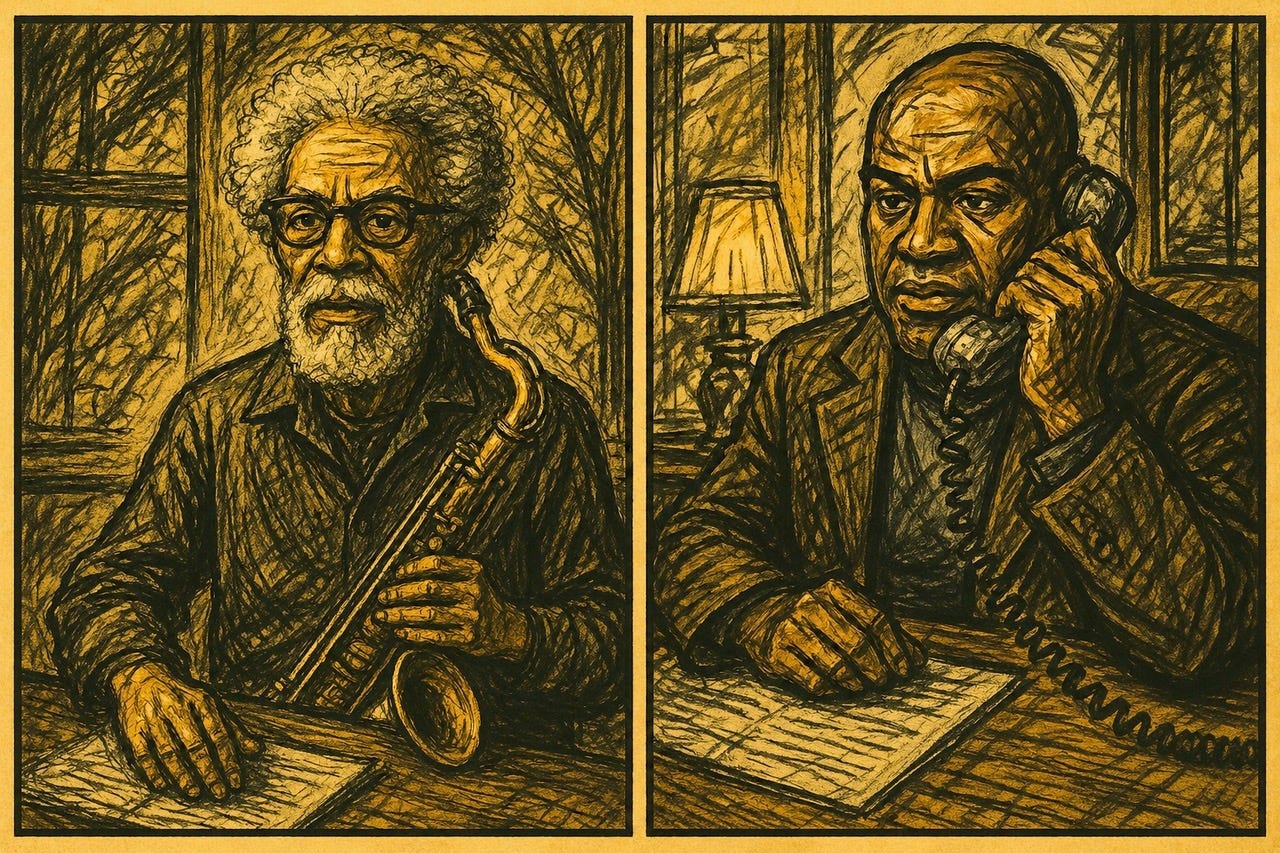
The death of Sonny Rollins this past week at age ninety-five was a deep lost to the history of jazz. As the last living link to both the Great Day in Harlem photo and to the legacy of giants inspired by Charlie Parker, Rollins’s career is a definitive statement of musical artistry.
But for me there’s a particular sense of disappointment since I’d had several amazing conversations with Sonny that I’d plan to translate into a short documentary film about his time practicing on the Williamsburg Bridge in the ‘50s and how that connects to his own formidable spiritual journey. I still intend to finish the project, but its bittersweet that Sonny will not be around to guide it to completion.
A few years ago, working on various documentary projects I had a chance to interview then ninety-one year old baseball great Willie Mays and then ninety-two year old ex-Atlanta Mayor and United Nations ambassador Andrew Young. To say I found these exchanges inspiring, educational and challenging is an understatement. Mays treated me like a rookie infielder just up from the minors, which was an manifestation of old school tough love. It was difficult at times but i got a true sense of characteristics that sustained him. Young was a smoother, more embracing presence who liked to laugh and gave good advice on marriage. He was a central figure in our nation’s history but he wears the cloak of importance lightly.
Excited by those talks I sought to speak with another elder, both for a project and just to feel the humanity of someone crucial to history. I thought of then ten ninety-three year old Sonny Rollins. I saw him perform live once at the Bottom Line nightclub in New York and that night he played more saxophone in one set than I’d heard in ten concerts. He sound was overwhelming and torrential, like he was the ocean and my ears the shore. Most music I’ve ever heard come any human. It turned out that Terri Hinte, who’d I known as head of publicity at Fantasy records in the ‘80s, had been helping Sonny with his affairs. With her kind assistance I was able to chat with Sonny on three occasions from his home in Woodstock.
Sonny was a deeply spiritual individual and we spent much more time talking about religion than jazz. He’d been house bound since the pandemic, but his mind traveled far and wide via his daily readings. When pressed for details about his life in jazz, Sonny spoke eloquently, sometimes sadly, always thoughtfully, about the impact of heroin on he and his peers, his interactions with Parker, and his search to create music in its purest form. He ruminated over bad things he’d done as a younger man. He didn’t live for adoration. He lived to play and later to pray. His attention to detail — from breathing techniques to proper fingering — fill his notebooks collected at the Shomburg Center in Harlem. In conversation he was no less exacting, yet always aware that perfection was always a note or two away. He could no longer physically play sax but the science of musicianship was never far from his mind, though now it was manifest in his voice, which contained a serious New York accent and a deep reverence for higher powers.
The link below is from our talk about about his years on the bridge. No visuals yet. Just Sonny’s voice talking about a pivotal moment in his life Looking forward to more fully honoring his journey in the near future.
RIP WALTER THEODORE “SONNY” ROLLINS